SIPTA School 2026: Brewing IP in the world's beer capital
Posted on September 14, 2026 by Nicolás Carrizosa (edited by Alexander Erreygers)[ go back to blog ]
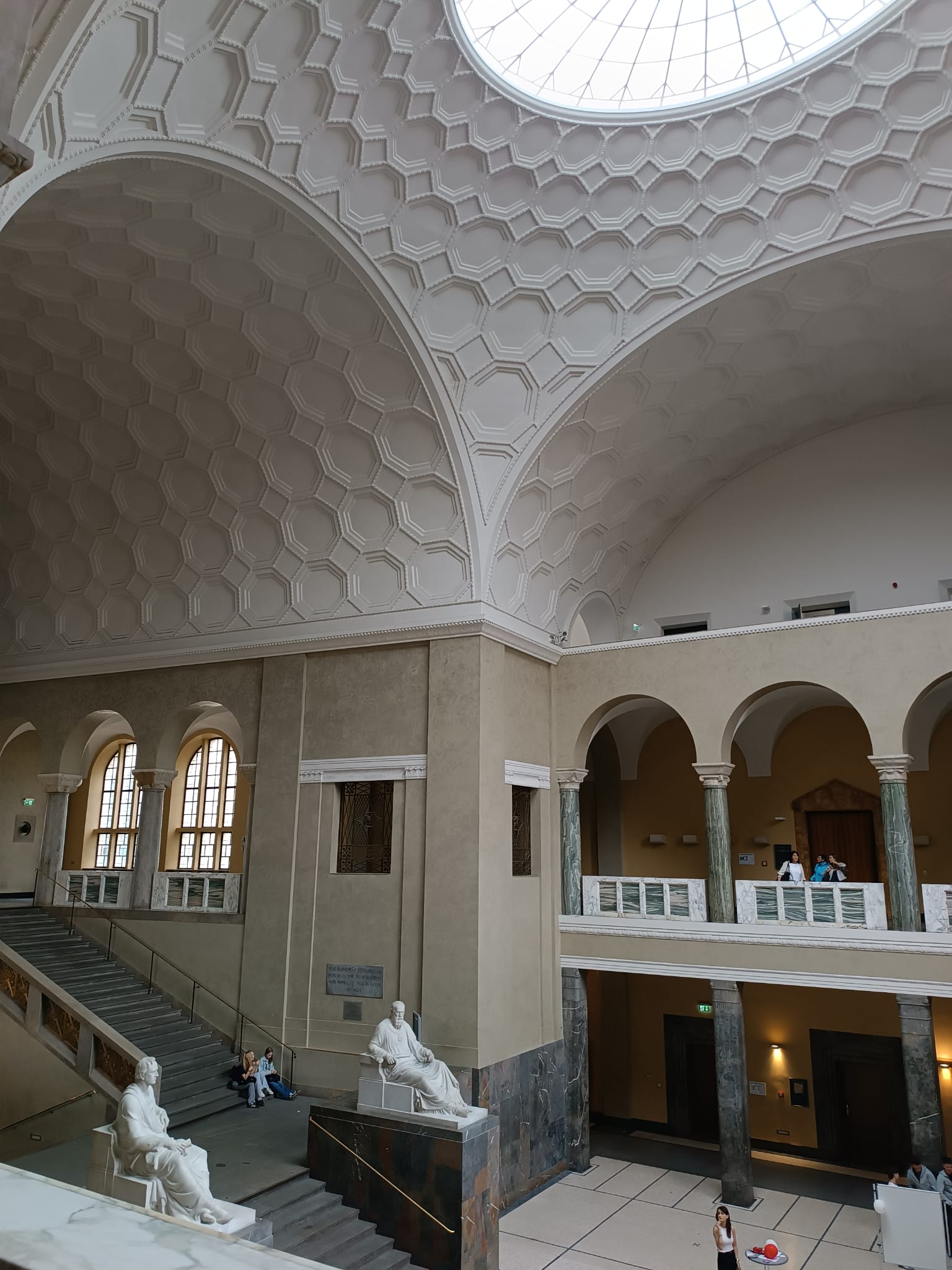 The Twelfth SIPTA School on Imprecise Probabilities was held in the Jewel of the South of Bavaria, Munich, Germany, in the Ludwig-Maximilians-Universität München, from Monday 27 July, to Friday 31 July 2026.
The school attracted a record number of 54 attendees, coming from diverse places and backgrounds, all united by a common goal: to learn about imprecise probabilities (IP) from some of the community’s leading lights.
Organized by the Chair of Artificial Intelligence and Machine Learning (AIML), Institute of Informatics, and AG Augustin, Department of Statistics, the school was also a tribute to their abruptly departed mentor, researcher, and community pillar, Thomas Augustin (LMU Munich), who is dearly missed.
Special mention goes to the organising team, for putting up such a well-coordinated school.
The Twelfth SIPTA School on Imprecise Probabilities was held in the Jewel of the South of Bavaria, Munich, Germany, in the Ludwig-Maximilians-Universität München, from Monday 27 July, to Friday 31 July 2026.
The school attracted a record number of 54 attendees, coming from diverse places and backgrounds, all united by a common goal: to learn about imprecise probabilities (IP) from some of the community’s leading lights.
Organized by the Chair of Artificial Intelligence and Machine Learning (AIML), Institute of Informatics, and AG Augustin, Department of Statistics, the school was also a tribute to their abruptly departed mentor, researcher, and community pillar, Thomas Augustin (LMU Munich), who is dearly missed.
Special mention goes to the organising team, for putting up such a well-coordinated school.
The first day of the summer school was led by Erik Quaeghebeur (Eindhoven University of Technology), who covered part of the foundational section. He gave a paced and comprehensive introduction to imprecise probabilities, presenting them as a natural generalization of probability theory and delving into several advanced models, such as sets of desirable gambles, multivariate scenarios, and conditioning under imprecision. The day ended with a pizza night, where students and lecturers had the chance to get in touch.
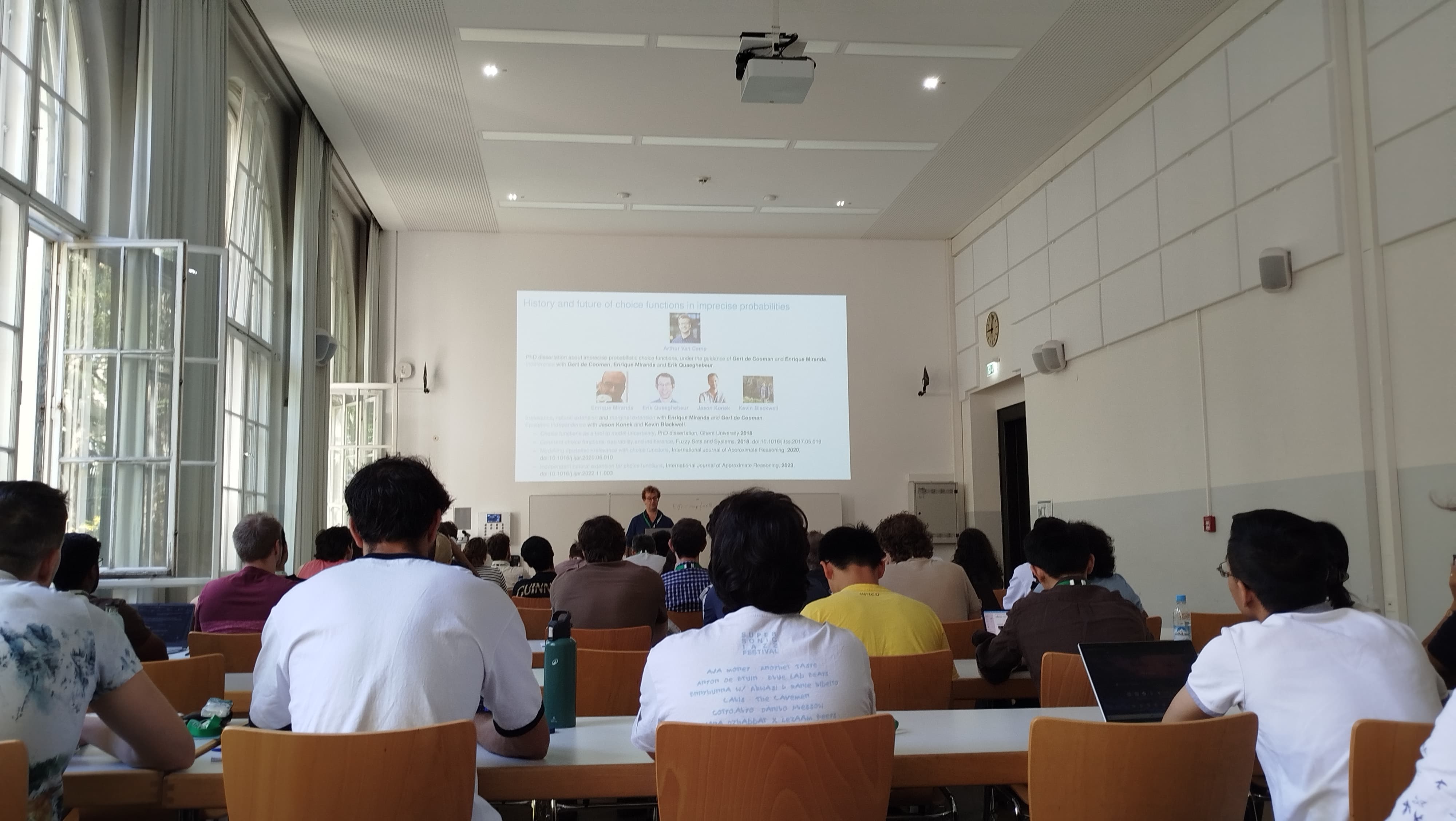
The second day began with Arthur Van Camp (Eindhoven University of Technology), who introduced and explored the capabilities of sets of desirable gambles as a richly informative IP model. He was followed by Catrin Campbell-Moore (University of Bristol), who covered the philosophy section, discussing the epistemological aspects of imprecise probabilities and the philosophical view of decision-making under imprecision.
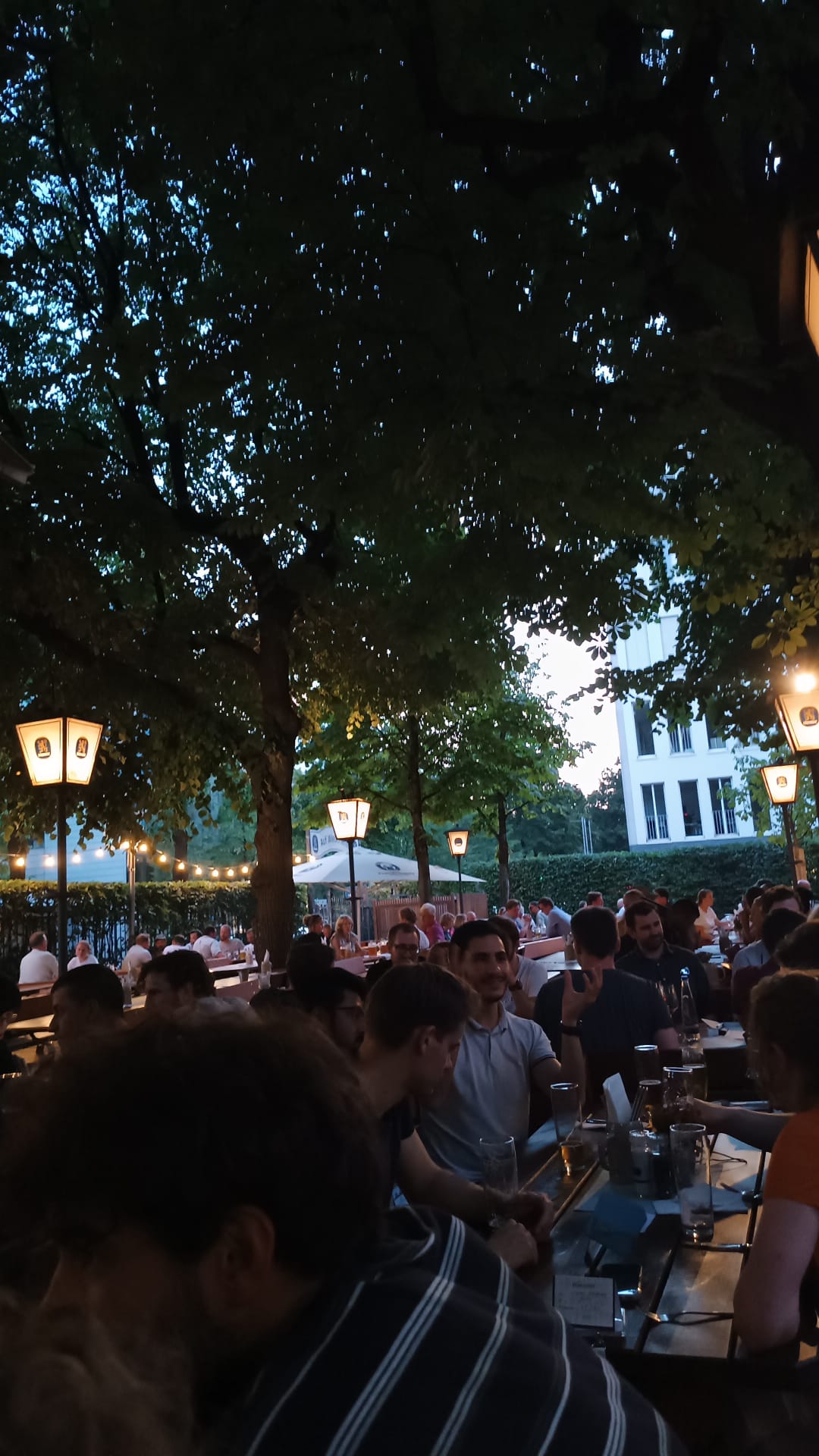
Christoph Jansen (LMU Munich) inaugurated the decision theory section, which filled the third day. He discussed the role of decision-making within AI and ML paradigms, covering decision-making with IP models and under weakly structured information. Then, Julian Rodemann (LMU Munich) spoke about statistical decision-making and its imprecise extension. The day concluded with a visit to the Spaten brewery, where brewer students guided us through the history, installations, and bottling process of some of Munich’s most renowned beers, followed by traditional German food at the Löwenbräu biergarten.

The fourth day was dedicated to the Statistics section, led by Ryan Martin (North Carolina State University), who addressed the necessity of uncertainty quantification for properly dealing with statistical inference, and presented possibilistic inferential models. Georg Schollmeyer (LMU Munich) then introduced partial identification models for regression and offered a glimpse into robust statistics.
The last day consisted of morning lectures on machine learning and a hands-on exercise for students. Eyke Hüllermeier (LMU Munich) opened the lectures by discussing the lack of uncertainty-awareness in ML systems, introducing uncertainty representation and conformal prediction. Alan Chau (Nanyang Technological University) followed, presenting statistical models based on second-order uncertainty and IP as a natural framework for uncertainty-aware prediction. Finally, Yusuf Sale (LMU Munich) delved into uncertainty quantification in large language models (LLMs) and its applications.
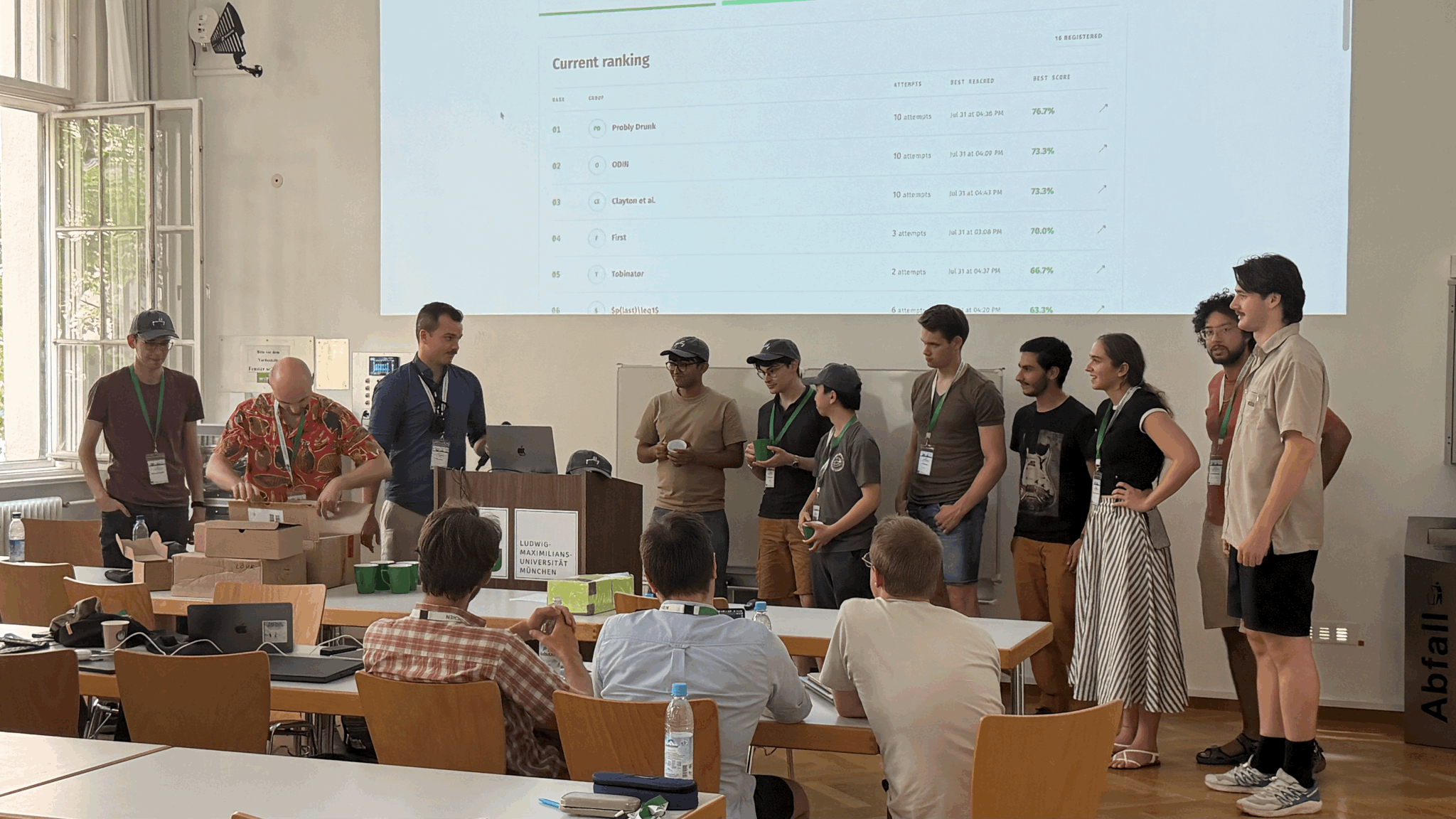
The hands-on session, organized by Timo Löhr (LMU Munich), Clemens Damke (LMU Munich), and Max Muschalik (LMU Munich), took the form of a group competition featuring an out-of-sample classification task using the Python package probly, which they developed. This allowed participants to put the morning lectures into practice.
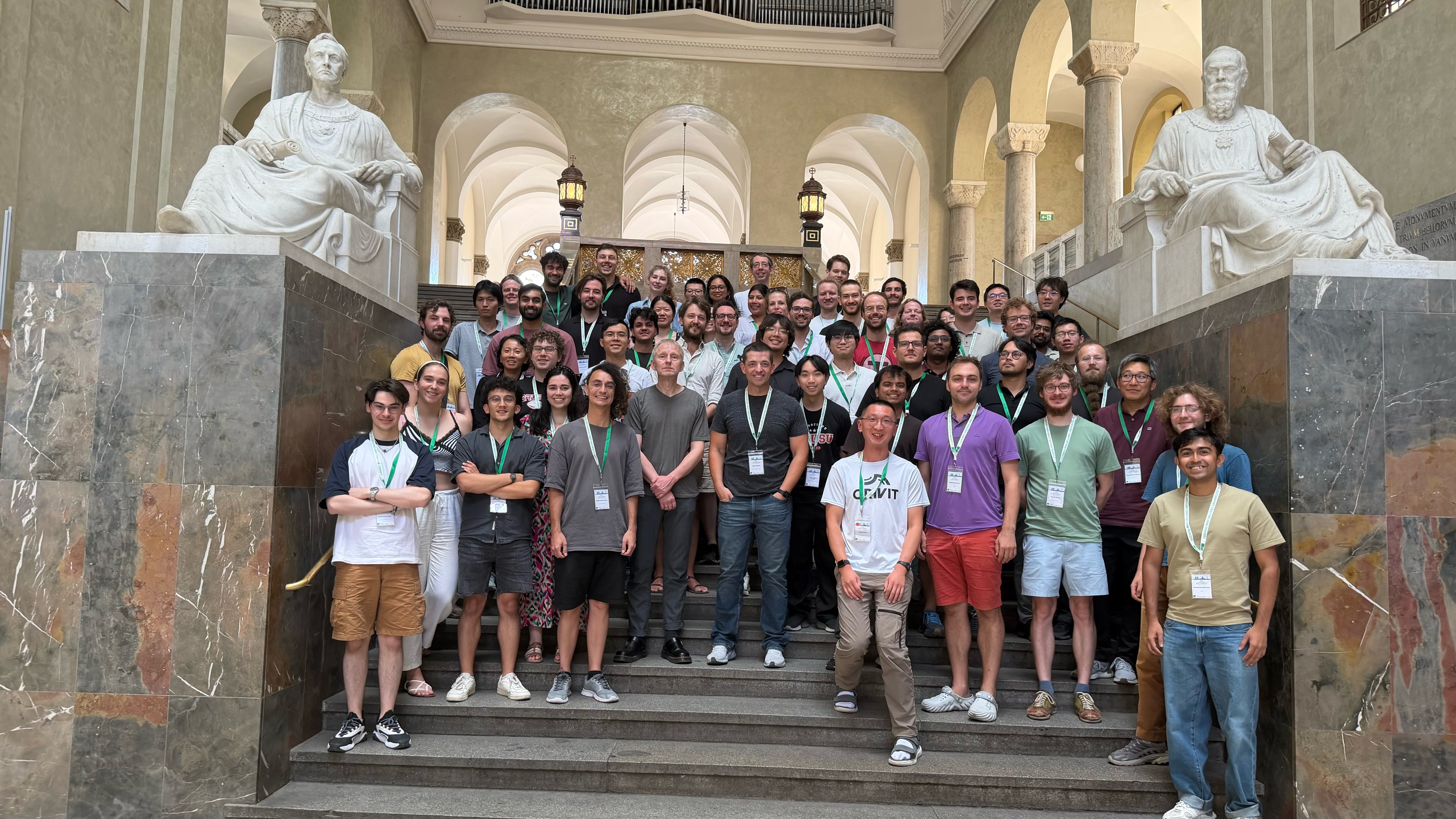
Overall, the 2026 SIPTA School brought together both the theoretical foundations for working with IP models and cutting-edge research across philosophy, statistics, machine learning, and AI, covering relevant and traction-gaining topics nowadays. It is no surprise that this wonderfully organized school attracted so many students and established researchers alike. Some of them, 10 students in particular, benefited from a grant from SIPTA supporting their registration fees and, in some cases, part of their travel expenses.

Nicolás Carrizosa is a first-year PhD Student in the Imprecision in the Aggregation of Information provided by Experts (IMAGINE) research group, associated with the University of Oviedo, under the supervision of Ignacio Montes and Enrique Miranda. His research interests include decision theory under imprecision, stochastic preference relations and model aggregation.